
 |
| https://vignette.wikia.nocookie.net/zootopia/images/a/ae/Judy-start-apology.jpg |
I recently had the pleasure of reading WildeCard’s fantastic article that delves into the ethics and morality of our favorite fox Nick Wilde. If you haven’t read it, stop reading this and give it a read - I promise you won’t be disappointed!
Now if you’re like me, you were surprised to see that Nick’s moral character was ever in doubt! As the article even points out, who doesn’t like the snarky, charismatic fox? But WildeCard’s article raises a number of very thought provoking questions for us to consider about Nick’s background, motivations and actions throughout the film. Questions that really got me thinking.
I learned a lot while grappling with the problem of Nick’s morality, and I’ve done my best to gather my thoughts on the topic and put them down here to serve as a kind of companion piece. Hopefully, dear reader, something in the ramblings below will inspire you to add to the discussion as much as WildeCard’s piece inspired me.
See you after the break!
“You Lied to Me You … Liar!”
 |
| https://i.pinimg.com/736x/e9/9e/1a/e99e1af167038aa2472cb953d6c17502--a-sheep-disney-disney.jpg |
But before I dive into the meat of things, I want to take a quick moment to point out that determining the morality of a lie is a complicated business - it's a question that philosophers have been debating for a very long time. Without getting into a detailed discussion of Deontology vs Consequentialism, the essential debate centers on whether lying is in it of itself morally wrong, or if there are circumstances where lying is morally correct. Philosophers like Immanuel Kant would argue that lying under any circumstance is wrong, where others like John Stuart Mill would say that a lie is only permissible if it does more good than harm.
For the purposes of this article, I will take a consequential approach to determining the morality of a lie - that is to say, I will look at the effect the lie had on those to whom it was told, and consider that along with the intent and context in which the lie was told to come to a conclusion about the lie’s morality.
This consideration extends as well to lies of omission or to any attempt made to deceive someone.
For the purposes of this article, I will take a consequential approach to determining the morality of a lie - that is to say, I will look at the effect the lie had on those to whom it was told, and consider that along with the intent and context in which the lie was told to come to a conclusion about the lie’s morality.
This consideration extends as well to lies of omission or to any attempt made to deceive someone.
The Pawpsicle Hustle
 |
| http://disney.wikia.com/wiki/File:Pawpsicle-Zootopia-Nick.png |
But how moral was the hustle, really?
Starting with the deception at the heart of the scheme - Nick and Finnick pretending to be a father and son respectively - let’s consider the intention of the parties involved and the effect their actions had.
For the majority of patrons in Jumbeaux’s Cafe, the deception had little impact on them except to serve perhaps as a momentary source of annoyance, interest or amusement. Everyone except for the two foxes and Judy almost certainly went on with their day without any real change. This includes Jerry himself - despite his abrasive, downright demeaning treatment of Nick, he ended up selling $15 of merchandise for $20 of recompense. Thanks to Judy, he got a $5 tip for essentially being a jerk.
Now, Nick and Finnick clearly benefited from the deception, netting a free Jumbo Pop.Their intent was clearly selfish - the whole operation they would embark on was predicated on obtaining a Jumbo Pop, and they gained a substantial amount of money as a result of deceiving Judy.
By far the biggest impact felt by the deception was on Judy’s part. She spent $20 dollars on a giant popsicle for what she thought was a caring father and son. Now discounting the financial impact (I sincerely hope that officers of the ZPD are paid enough that $20 is not a significant expenditure), Judy was duped into thinking she’d done something altruistic.
This is something very important to note: up until the point that Judy discovers the true nature of Nick and Finnick, she thought she had done something selfless. Indeed, if Nick and Finnick had been father and son, would not Judy’s actions have been noble?
It is telling that in the shot immediately following Nick and Finnick’s departure, we see Judy taking to the hot and miserable work of ticketing cars in Sahara Square with aplomb. The rabbit elated in having ‘made a difference’, however small. But once she sees the hustle for the deception it is, she is enraged - her pride in herself for having made a difference is shattered.
You might be asking then, if Judy had never discovered the truth about the hustle, would that diminish the immorality of the deception?
I argue that it would not - Nick and Finnick’s intent was anything but altruistic, and ultimately Judy discovering the nature of the hustle had no real impact on the outcome of the hustle itself.
As Judy stalks the two foxes, we see the later stages of the hustle: having melted down the Jumbo Pop, Nick turns a handy profit selling the melted down and refrozen pawpsicles at $2 a pop. This is not really an immoral act per se - aside from some legitimate questions about food sanitation, this is more a clever act of entrepreneurship than anything else.
On the other hand, misrepresenting the collected pawpsicle sticks as ‘red wood’ (space in the middle) to the rodent construction crew is definitely morally wrong. But - and this is perhaps me being generous - it seems that the building practices in Little Rodentia leave a lot to be desired, especially considering how readily Judy and Weasleton were able to knock apartments loose from their foundations (or lack thereof). Also, I don’t think that the type of the wood in the pawpsicle sticks makes much of an impact at the scale of construction used in rodent buildings, but if there are any architects or materials engineers that can speak to this, I’d love to know more!
All in all, I still think the greatest injury caused by this hustle was to Judy’s pride - a side effect that only occurred by accident. The hustle was designed to prey upon someone altruistic, and leave them with a sense of pride for having done something ostensibly noble for a father and his son.
One could argue that designing the hustle like this was just practical - the best cons are the ones in which the victim believes they are the hustler, after all. But I do think it’s worth noting that when executed correctly, this hustle causes almost no injury to anyone.
This is speculative on my part, but I think this is reflective of Nick’s character - to design a hustle that gets him what he needs without substantially injuring anyone … even making the ‘victim’ feel good about an imagined act of kindness.
Nick’s actions here are not morally “right” in any sense - he employs lies and deceit to trick unwitting victims into buying the Jumbo Pop for him under false pretense. This is objectively wrong.
But one must consider the context under which Nick operates - Jerry and the elephants are actively hostile to his presence in the cafe. I don’t think that there was any other way Nick could have come into possession of a Jumbo Pop, even if he had tried to pay for it himself. The societal bias against foxes (let alone predators) is blatant and pervasive - hence the need for some kind of trick.
Does this somehow excuse the hustle? No, not entirely … but it does temper my judgement of the act.
Naïveté vs Cynicism
 |
| https://vignette.wikia.nocookie.net/zootopia/images/5/53/Nick_Wild_talking_to_Judy_Hopps.jpg |
Throughout the movie, we’ve seen the world through Judy’s optimistic point of view. Her assertion in the opening play that “anyone can be anything” forms the thesis. One that Nick restates even as he mocks Judy for holding it, “Everyone comes to Zootopia thinking they can be anything they want. Well you can’t. You can only be what you are.”
This is the antithesis to Judy’s naive optimism, its natural negation. Nick and Judy’s worldviews at this point are fundamentally contradictory, and from this clash of perspectives conflict inevitably arises.
In the aftermath of the hustle, Judy confronts Nick about his deception and tries to arrest the fox. While he skillfully dodges the attempt, Nick shows no signs of remorse for his actions, going so far as to mock Judy for her naivete. Disagreeing with and arguing against another person’s viewpoint is not immoral, but the manner in which Nick mocks Judy is anything but kind - he’s clearly trying to get under the rabbit’s skin.
His intent here could be purely practical. By making Judy agitated, it makes it easier for him to control the situation. This even seems to work; Judy is so flustered that she completely overlooks a blink-and-you-miss-it act of petty theft when Nick pockets a handful (pawful?) of blueberries from a produce stand.
Further, I definitely think Nick is deriving some satisfaction from having tricked Judy - or perhaps more aptly, having tricked an officer sworn to uphold the very law he’s flaunting. This is clearly a selfish pleasure, gained at Judy’s expense.
I also wonder how much of Nick’s tirade is motivated by jealousy and anger - as we later learn, Nick had aspirations of being “brave, loyal, helpful, and trustworthy” before they were shattered by the cold bite of a steel muzzle. So why should Judy succeed in her dreams when he was so cruelly barred from his? How is that fair?
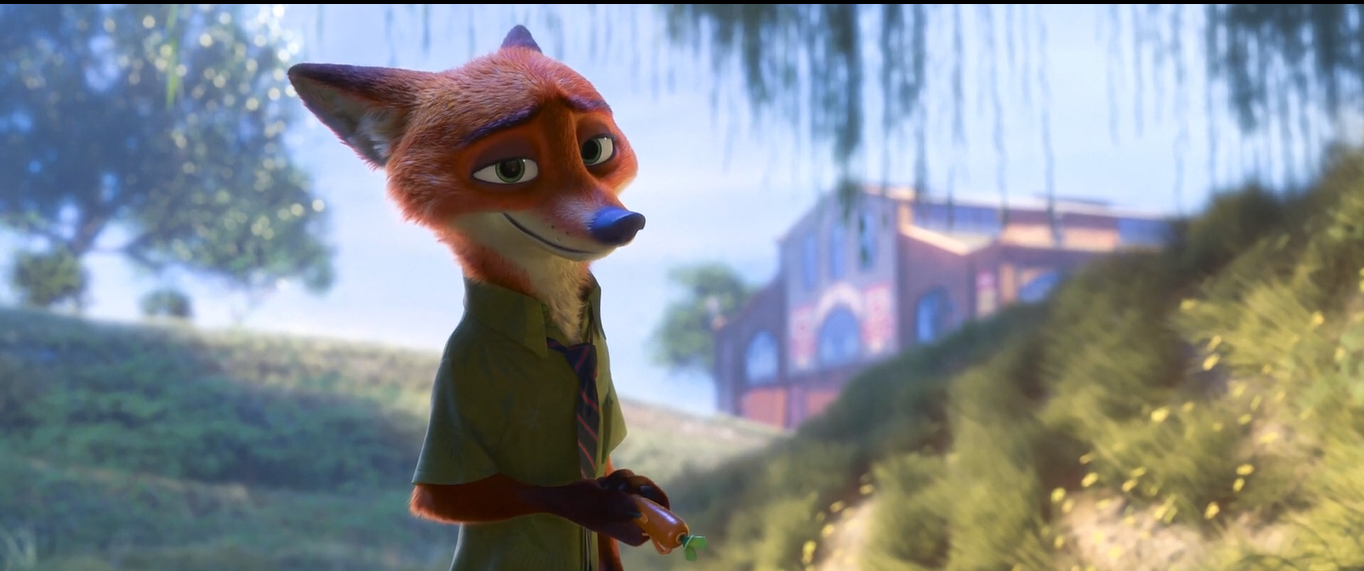
But lastly, I posit here another motivation - this one a bit more charitable. Granted, this is much more speculative, but I think Nick was also trying to warn Judy. In his diatribe, Nick makes a dire prediction about Judy’s future, “And soon enough those dreams die and our bunny sinks into emotional and literal squalor living in a box under a bridge.” This is an oddly specific thing to say. Though we may at first think nothing of it, after the press conference we see a very dejected Nick sitting by a stone bridge next to an upturned box.
On its face, Nick’s tirade seems to be directed at Judy. But the specifics of it, the predictions he makes are feasibly drawn from Nick’s own experience. He’s lost his idealism, and suffered for it.
Again, this is speculative - but would it not be gentler for Judy’s worldview to be broken by one “shifty, untrustworthy fox” than have it come crashing down on her head in a chorus of mocking laughter? It’s my contention that Nick is - at least in part - trying to disabuse Judy of this dangerous naivete before she suffers the same kind of trauma he did. So what if she hates him for it? As far as Nick believes, nobody loves a fox anyway.
Ultimately, I think Nick’s motivations were a combination of all of the above. His conduct was anything but nice, but I have hard time condemning it as being devoid of some small glimmer of charitable intent.
Malicious Compliance
 |
| http://wiki.armello.com/images/1/1c/Blackmail.gif |
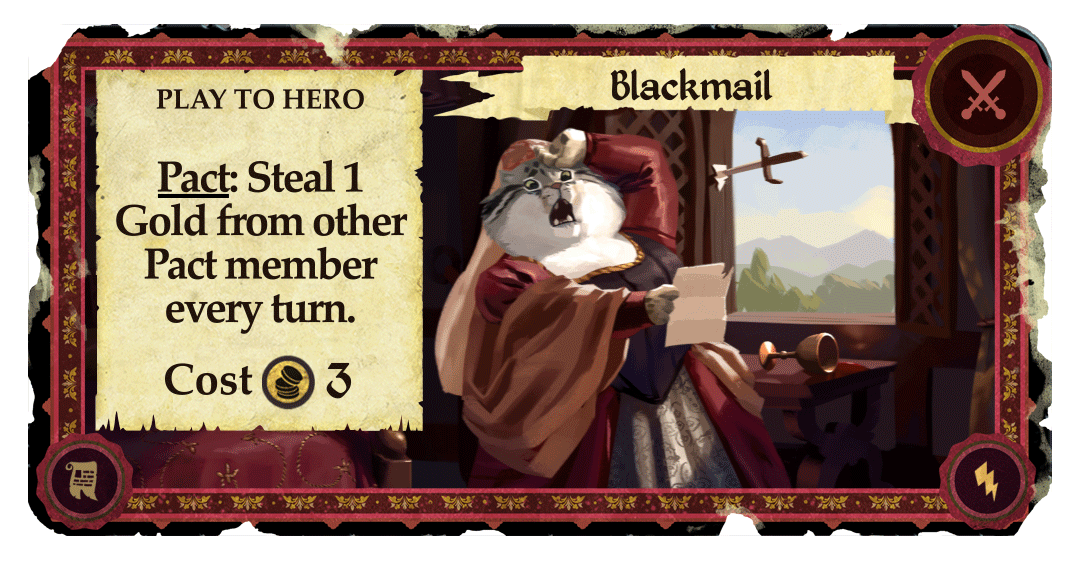
Pulling Nick’s tax records and playing on his smugness to surreptitiously record a confession was a brilliant move - Nick digs his own metaphorical grave. Using the threat of charging Nick with tax evasion to blackmail him into cooperation is not only perfectly legal, it’s in keeping with tactics used by law enforcement in the real world.
In the face of this, Nick has every right to be annoyed. Nobody likes to be press ganged into unwitting service, especially if they don’t exactly have a high opinion of the person impressing them. But turnabout is fair play, and we can scarcely say Nick doesn’t deserve the inconvenience.
But I think Nick is motivated by more here than just a desire to keep himself out of jail, or solely to sabotage Judy’s investigation. Nick turns it into something of a game, a way to gauge the mettle of this rabbit.
At Mystic Springs, for example, Nick tests Judy’s resolve in the face of the ‘naturalist lifestyle.’ Offering her an out he says, “There’s no shame in callin’ it quits.” When Judy presses on regardless Nick seems almost impressed.
When Judy continues to hold the threat of the pen over his head, he leads Judy to the DMV. And there he tests her patience by waiting for the key moment to tell Flash that joke.
Finally, things come to a head in front of the gates of the Tundratown Limo Service. Judy rightly accuses Nick of wasting the day on purpose. When Judy pointedly asks Nick, “Does seeing me fail somehow make you feel better about your own sad, miserable life?” the fox answers rather disingenuously that it does.
And largely, I think he does find enjoyment in frustrating Judy. In some sense, it means he’s the ultimate victor in this battle of wits.
But I don’t think his enjoyment is born out of pure malice - it’s clear that Nick doesn’t grasp, or at least doesn’t appreciate the stakes of the case. He hasn’t been taking Judy or the case seriously, and dismisses her appeal to help find Otterton offhand. Up until this moment, Nick has largely been causing more harm than good in this case.
But in the very next scene inside the limo, Nick is forced to confront the stark reality of the case. You can see the sudden realization on Nick’s face as he looks into the torn up back seat of the limo. And immediately, Nick stops any resistance to Judy and begins to actively help the investigation.
So why does understanding the stakes make a difference here? If Nick were only motivated by a desire to avoid personal inconvenience or harm, the stakes of the case would be completely irrelevant. It doesn’t affect him at all. But Nick is visibly shaken by what he sees, and begins to actively cooperate. Why the change?
It could be fear brought on by the dawning realization of exactly how much trouble Nick’s gotten himself into - blackmail was bad enough, but the potential to be hurt is quite another!
That said, I think that Nick never intended to really impede a serious investigation where a mammal’s life and well-being clearly hung in the balance. But when the “pretend investigation” suddenly becomes real, Nick is forced to consider that more was riding on this case than just his own interests.
I think this is telling. Nick doesn’t want to hurt people - annoy them, yes. Trick and deceive them? Sure - so long as he didn’t really injure them. But as he and Judy glanced around the back of the limo, Nick realized any further impeding had the potential to do actual harm. As soon as resistance or malicious compliance had the potential to affect more than just Judy, he couldn’t justify it morally.
In the face of this, Nick has every right to be annoyed. Nobody likes to be press ganged into unwitting service, especially if they don’t exactly have a high opinion of the person impressing them. But turnabout is fair play, and we can scarcely say Nick doesn’t deserve the inconvenience.
But I think Nick is motivated by more here than just a desire to keep himself out of jail, or solely to sabotage Judy’s investigation. Nick turns it into something of a game, a way to gauge the mettle of this rabbit.
At Mystic Springs, for example, Nick tests Judy’s resolve in the face of the ‘naturalist lifestyle.’ Offering her an out he says, “There’s no shame in callin’ it quits.” When Judy presses on regardless Nick seems almost impressed.
When Judy continues to hold the threat of the pen over his head, he leads Judy to the DMV. And there he tests her patience by waiting for the key moment to tell Flash that joke.
Finally, things come to a head in front of the gates of the Tundratown Limo Service. Judy rightly accuses Nick of wasting the day on purpose. When Judy pointedly asks Nick, “Does seeing me fail somehow make you feel better about your own sad, miserable life?” the fox answers rather disingenuously that it does.
And largely, I think he does find enjoyment in frustrating Judy. In some sense, it means he’s the ultimate victor in this battle of wits.
But I don’t think his enjoyment is born out of pure malice - it’s clear that Nick doesn’t grasp, or at least doesn’t appreciate the stakes of the case. He hasn’t been taking Judy or the case seriously, and dismisses her appeal to help find Otterton offhand. Up until this moment, Nick has largely been causing more harm than good in this case.
But in the very next scene inside the limo, Nick is forced to confront the stark reality of the case. You can see the sudden realization on Nick’s face as he looks into the torn up back seat of the limo. And immediately, Nick stops any resistance to Judy and begins to actively help the investigation.
So why does understanding the stakes make a difference here? If Nick were only motivated by a desire to avoid personal inconvenience or harm, the stakes of the case would be completely irrelevant. It doesn’t affect him at all. But Nick is visibly shaken by what he sees, and begins to actively cooperate. Why the change?
It could be fear brought on by the dawning realization of exactly how much trouble Nick’s gotten himself into - blackmail was bad enough, but the potential to be hurt is quite another!
That said, I think that Nick never intended to really impede a serious investigation where a mammal’s life and well-being clearly hung in the balance. But when the “pretend investigation” suddenly becomes real, Nick is forced to consider that more was riding on this case than just his own interests.
I think this is telling. Nick doesn’t want to hurt people - annoy them, yes. Trick and deceive them? Sure - so long as he didn’t really injure them. But as he and Judy glanced around the back of the limo, Nick realized any further impeding had the potential to do actual harm. As soon as resistance or malicious compliance had the potential to affect more than just Judy, he couldn’t justify it morally.
Guilt by Association
 |
| https://78.media.tumblr.com/72544e586227de95dd866c2527cd6b3c/tumblr_o08ilirgfY1ub6sn2o1_1280.jpg |
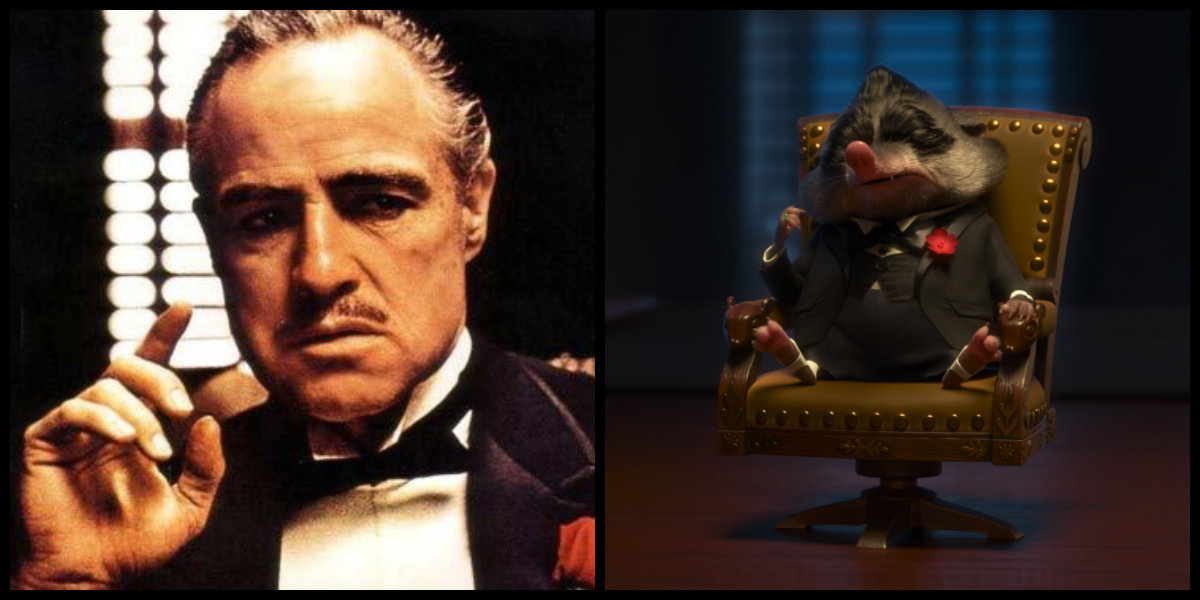
In his article, WildeCard notes that Nick’s association with Mr. Big casts some doubt on the ethics of his previous interactions. And while I agree that Nick’s association is quite dubious, I don’t think that it is in it of itself an indictment of his moral character.
At the risk of engaging in whataboutism, I feel compelled to bring up Emmitt Otterton. A florist and father of two children - is he not at the same risk of guilt by association for being Mr. Big’s florist? Does Fru-Fru run the same risk?
The only thing we can really consider with regards to Nick’s interactions with Big is the Skunk Butt Rug incident. Nick admits to selling Mr. Big a “wool” rug made from skunk butt fur, and Big was (quite rightly) annoyed - especially since he buried Gram-mama in the rug. But aside from the deceit implicit in the false advertising, we don’t have enough information to really speculate on what was involved in this.
It’s worth noting that Mr. Big seemed more disappointed in Nick than angry. He scolds Nick for tricking him after they’d “broke bread together” and after Gram-mama had “made [him] a cannoli”, implying a relationship that was more than strictly business. If The Godfather is any indication, it might simply be the Big’s modus operandi to blur the lines between business and family as a way of instilling personal loyalty. Judging from Nick’s crestfallen look while being so scolded, it must have worked to some degree.
But we can’t forget that the mob’s business is criminal - much more likely to be immoral than not. We can speculate about to what degree Nick was involved in things. But in absence of definitive information we must presume Nick to be innocent until proven guilty. We do not know what Nick did or didn’t do in connection with the mob.
While it is certainly possible that Nick was involved in the truly dark parts of the mob (murder, drug dealing, etc) I sincerely doubt it. Especially considering how much effort Nick goes to to avoid severely injuring anyone in the pawpsicle hustle.
"None of You Guys Were Going to Help Her!"
 |
| http://disney.wikia.com/wiki/File:Nick_and_Bogo_Zootopia.jpg |
After Big points them to Manchas, we get our first big example of Nick actively aiding in the investigation as he smooth talks the jaguar into opening the door. Judy is visibly pleased at this, but they don’t have a lot of time to dwell on it thanks to a shot from a Night Howler dart.
Things are very tense while the two flee from the feral Manchas. In stressful life-or-death situations, you don’t have time to consider the long term ramifications of your actions or do much else other than operate on instinct.
Nick’s instinct in the moment he reached the sky tram was to make sure Judy got aboard first. Without thinking, he opened the door and turned to help Judy in. Failing to find her immediately he calls out to her. Judy tells him to go, but by then it's too late.
This I think is very indicative of Nick’s moral character. The personal stakes couldn’t be higher: he’s literally a few feet short of being mauled to death by an angry jaguar but his immediate impulse is not to ensure his own personal safety but to look to ensure Judy’s.
After Judy and Nick escape from Manchas a la Tarzan and are found by the ZPD, we reach yet another scene critical in an understanding of Nick’s moral character. Manchas is nowhere to be found and Judy is left trying to explain what happened. Disinterested, Bogo demands Judy’s badge.
In that moment Nick sees that all of the time he wasted, all of the aggravations he caused Judy had a real and profound impact. He saw that she is about to suffer the very same shattering of her dreams that Nick suffered. And in that moment, he decides to intervene.
I’m sure Nick felt guilty, and I’m certain that played into his decision to step forward. But I also think Nick was genuinely offended by how Bogo was treating Judy. So he put his wit to work, found a loophole, called out the chief on his bullcrap (buffalo crap?), and committed himself to helping Judy solve the case.
But why?
If his intent, his purpose was to simply avoid getting arrested he had every reason to keep his mouth shut. Judy would have been sent packing in shame, and Nick could have walked away scott-free. Nick gained absolutely nothing by speaking up.
In fact, he risks a great deal - he’s potentially offended the chief of police, never a good thing to do in his line of work. And considering the near-death experience Nick just escaped, he must realize that continuing to help Judy puts him at risk of bodily harm.
But he does so anyway, and moreover he drops the mask of cynicism and snark to share the defining moment of childhood trauma that made him who he is.
Things are very tense while the two flee from the feral Manchas. In stressful life-or-death situations, you don’t have time to consider the long term ramifications of your actions or do much else other than operate on instinct.
Nick’s instinct in the moment he reached the sky tram was to make sure Judy got aboard first. Without thinking, he opened the door and turned to help Judy in. Failing to find her immediately he calls out to her. Judy tells him to go, but by then it's too late.
This I think is very indicative of Nick’s moral character. The personal stakes couldn’t be higher: he’s literally a few feet short of being mauled to death by an angry jaguar but his immediate impulse is not to ensure his own personal safety but to look to ensure Judy’s.
After Judy and Nick escape from Manchas a la Tarzan and are found by the ZPD, we reach yet another scene critical in an understanding of Nick’s moral character. Manchas is nowhere to be found and Judy is left trying to explain what happened. Disinterested, Bogo demands Judy’s badge.
In that moment Nick sees that all of the time he wasted, all of the aggravations he caused Judy had a real and profound impact. He saw that she is about to suffer the very same shattering of her dreams that Nick suffered. And in that moment, he decides to intervene.
I’m sure Nick felt guilty, and I’m certain that played into his decision to step forward. But I also think Nick was genuinely offended by how Bogo was treating Judy. So he put his wit to work, found a loophole, called out the chief on his bullcrap (buffalo crap?), and committed himself to helping Judy solve the case.
But why?
If his intent, his purpose was to simply avoid getting arrested he had every reason to keep his mouth shut. Judy would have been sent packing in shame, and Nick could have walked away scott-free. Nick gained absolutely nothing by speaking up.
In fact, he risks a great deal - he’s potentially offended the chief of police, never a good thing to do in his line of work. And considering the near-death experience Nick just escaped, he must realize that continuing to help Judy puts him at risk of bodily harm.
But he does so anyway, and moreover he drops the mask of cynicism and snark to share the defining moment of childhood trauma that made him who he is.
The Sublime Power of Forgiveness
 |
| http://images6.fanpop.com/image/photos/39600000/-zootopia-nick-wilde-zootopia-39638130-1364-571.png |
I don’t have too much to say about the press conference with regards to how it relates to the moral character of Nick. But man, it’s a rough moment to say the least - and one that I keenly remember watching with stunned amazement as it unfolded in the theater.
Nick continues to help Judy, reassuring her and coaching her in how to answer a question by answering a talking point. And then Judy gives Nick an application and the pen she’d been blackmailing him with, asking him to be her partner.
If Nick sharing the story of his childhood trauma with Judy was indicative of cracks in his cynical worldview, this shatters it. For the first time in the movie, Nick is literally speechless. And the warm smile that he gives Judy in response is the first genuine smile we’ve seen on his face.
In this moment, Judy has shown that the hardline cynical attitude Nick had protected himself with for years wasn’t necessary.
And then Judy opens her mouth.
You couldn’t have picked a moment where Nick would be more vulnerable. He had literally just taken the first step towards becoming something better by filling out the application. And then Judy reveals that underneath it all she suffered from the same fundamental bias that led the scouts to torment Nick.
He confronts Judy, and when she reaches for the pepper spray all of Nick’s fears are confirmed. In Nick’s view, Judy tricked him into believing she genuinely cared about him. Got him to lower his defenses, and used him. The ultimate hustle.
It’s easy to sympathize with Nick here, and anyone who’s had their trust betrayed knows how angry and bitter it can make someone. And Nick has every right to storm off and sulk under a bridge.
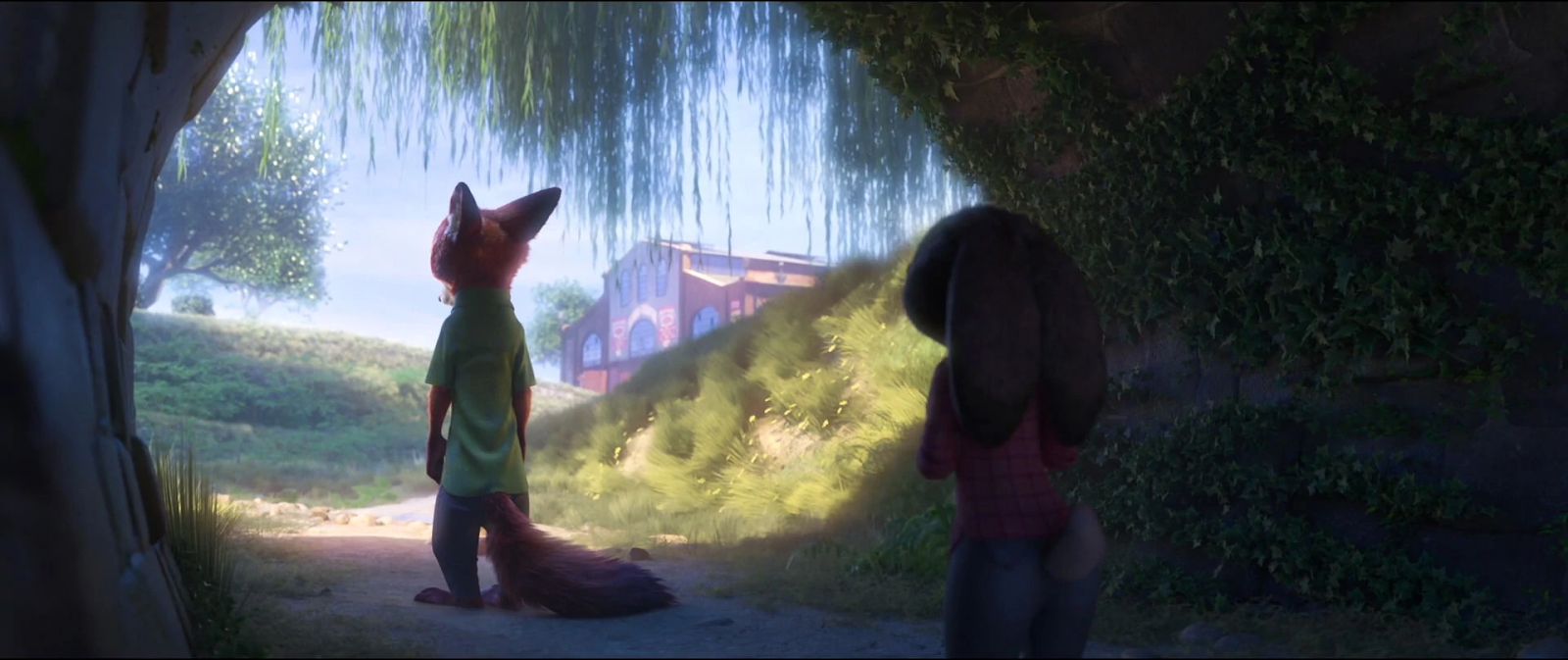
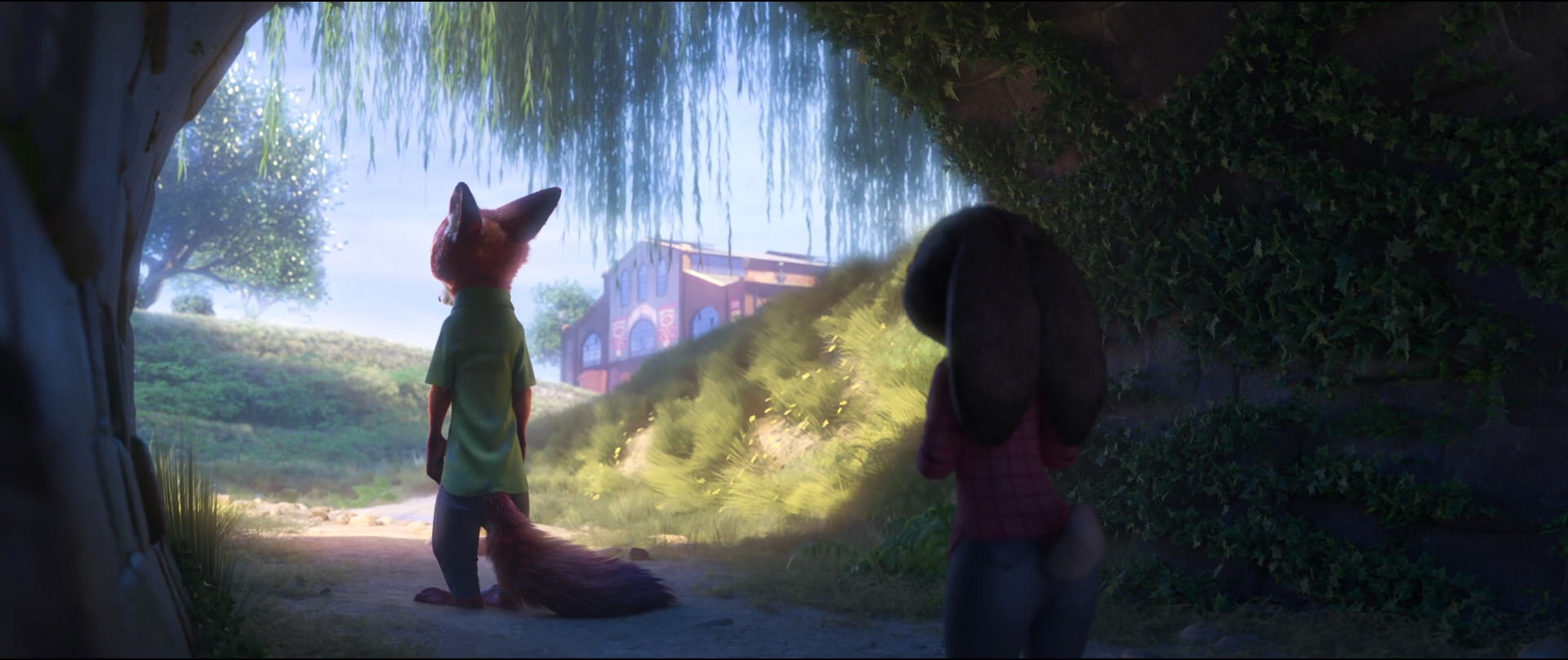
In time Judy finds him there, and bares her soul through choked sobs of sorrow. The apology she gives is painfully heart-felt as she begs Nick to help.
And it is there, under that cobblestone bridge that what I think is the single greatest moral act in the entire movie happens.
Nick forgives Judy.
It is such a quiet moment. But such is the power of forgiveness that Judy’s heart-wrenching tears of sorrow turn into tears of joy with only a warm smile and a bad joke.
Nick has every right to be bitter, and angry, to nurse his injury. But Nick refuses to let Judy suffer, and in forgiving Judy lifts the burden of his own injury off himself. In one small act, two moral injuries are made right.
I firmly believe that the capacity for true forgiveness is one of the greatest hallmarks of a morally good person. Whatever doubts I may have about Nick being a good person are set to rest in this moment.
Now you may have noticed that I left out a major concept when discussing above about how Judy and Nick’s worldviews served as thesis and antithesis to one another. The third pillar of this concept is what happens when the thesis and antithesis are reconciled to form something new, a synthesis.
The Archbishop Desmond Tutu once said, “Forgiveness says you are given another chance to make a new beginning.”
That’s exactly what Nick and Judy are able to do. Together, they come to a synthesis of worldview - something neither too cynical nor too naive.
Judy states it best at the end of the movie, “Turns out, real life is a little bit more complicated than a slogan on a bumper sticker. Real life is messy. We all have limitations. We all make mistakes. Which means―hey, glass half full!―we all have a lot in common. And the more we try to understand one another, the more exceptional each of us will be. But we have to try.”
And together, Nick and Judy risk life and limb to stop Bellwether and save Zootopia. Nick joins the force, and the movie ends with a new beginning for Nick as Judy pins a badge to his chest.
I want to once again thank WildeCard for prompting me to write this, however indirectly! I hope you found it interesting, and I’d love to hear your thoughts below!

Bummer out!





No comments:
Post a Comment